 Olu
Soups Around the World: 35 Traditional Soups by Country
Soups around the world in 35 countries: one traditional soup each, from Vietnamese pho to Haitian soup joumou and Ukrainian borscht, with a source for each row.
Updated 19 November 2026 · 10 min read
On this page
Almost every kitchen in the world has a pot of soup in its history. Some soups simmer for hours from bones and spices. Others are blended cold in a few minutes, soured with tamarind, thickened with seeds, or poured over rice. Many began as a way to stretch what was in the house, and many are still cooked at home on cold days and special days.
This guide lists soups around the world: 35 countries, one well-known soup each, grouped by region. Each row links the pages it comes from. One soup per country is a shortcut. Most countries have dozens, and the same soup changes from region to region and family to family, so read each row as one famous example, not "the" soup of that country.
The short answer: famous soups by country include pho in Vietnam, miso soup in Japan, borscht in Ukraine, goulash in Hungary, gazpacho in Spain, bouillabaisse in France, harira in Morocco, egusi soup in Nigeria, tom yum in Thailand, sinigang in the Philippines, pozole in Mexico, ajiaco in Colombia and soup joumou in Haiti. They fall into a few families: long-simmered broths, sour soups, soups thickened with seeds, greens or bread, and cold summer soups.
Ask a home cook abroad which soup their family makes
Soups around the world, country by country
Africa and the Middle East
| Country | Soup | Source |
|---|---|---|
| Morocco | Harira: lentils, chickpeas and vegetables simmered with spices and tomatoes, finished with rice or fine noodles. Often served to break the fast during Ramadan, and at weddings. | Tasting Table, Fine Dining Lovers |
| Egypt | Melokhia (molokhia): chicken or rabbit broth with the greens of a mallow plant, which thicken it. Served over rice with browned vermicelli. | Tasting Table |
| Nigeria | Egusi soup, thickened with egusi, the seeds of gourd plants such as melon and squash. | Wikipedia |
| Ghana | Light soup, from the Akan people. It is called "light" because the dark broth is thin. It began as a tomato-based fish soup for fishermen on the coast of Accra and is now often made with goat, lamb or beef. | Wikipedia |
| Iran | Ash reshteh, one of a family of thick soups (ash or aush) served hot, with many regional recipes. | Wikipedia |
Europe
| Country | Soup | Source |
|---|---|---|
| Hungary | Goulash: meat (usually beef), paprika and vegetables, especially potatoes. One of Hungary's national dishes and a symbol of the country. | Wikipedia, Wikipedia |
| Ukraine | Borscht: a dark red soup of beetroot and cabbage, often with meat and sour cream, made for family meals and weddings. In 2022 UNESCO recognised Ukrainian borscht cooking as intangible cultural heritage. | Tasting Table, Fine Dining Lovers |
| Russia | Shchi, a cabbage soup, listed as a national Russian dish. | Wikipedia |
| Poland | Żurek (żur), made with soured rye flour, a little like sourdough, and meat. Also eaten in Belarus. | Wikipedia |
| Georgia | Kharcho: lamb, rice and vegetables in a well-spiced broth. | Wikipedia |
| Bulgaria | Tarator, a cold soup of yogurt and cucumbers. | Wikipedia |
| Greece | Fasolada: white beans, onions, garlic and celery, usually with tomato, finished with olive oil. An everyday soup. | Tasting Table |
| Italy | Minestrone, a thick soup of many vegetables, often beans, and sometimes pasta or rice. Traditionally made without meat, and with no fixed recipe. | Wikipedia |
| Spain | Gazpacho: puréed tomatoes, cucumbers, peppers, bread and olive oil, served chilled in summer, especially in Andalusia. | Fine Dining Lovers, Wikipedia |
| Portugal | Caldo verde, "green broth": potatoes, thinly sliced kale and garlic, with slices of chouriço added before serving. Everyday food. | Tasting Table, Wikipedia |
| France | Bouillabaisse, a Provençal fish soup that began in Marseille, where it was made from the catch that did not sell. Saffron, garlic and several kinds of Mediterranean fish go in. | Fine Dining Lovers, Wikipedia |
| Netherlands | Snert (erwtensoep), a thick pea soup eaten in winter, traditionally with sliced sausage. | Wikipedia |
| Finland | Kesäkeitto, "summer soup": potatoes, carrots, peas, cauliflower and other seasonal vegetables cooked in milk with butter. | Wikipedia |
| United Kingdom (Scotland) | Cullen skink: smoked haddock, potatoes, onions and cream. | Wikipedia |
Asia
| Country | Soup | Source |
|---|---|---|
| Vietnam | Phở: rice noodles in a beef or chicken broth that takes several hours to make, with ginger, star anise and cinnamon, plus herbs, lime and chilli at the table. The modern form emerged in northern Vietnam in the early 1900s. | Wikipedia, Fine Dining Lovers |
| Japan | Miso soup: dashi stock with miso paste dissolved in it, often with tofu and seaweed. Eaten at any meal, breakfast included. | Wikipedia, Fine Dining Lovers |
| South Korea | Samgyetang, a chicken soup with ginseng, glutinous rice, jujubes, chestnuts, garlic and ginger. | Wikipedia |
| Thailand | Tom yum: lemongrass, galangal, kaffir lime leaf, fish sauce and lime juice in the broth, often with shrimp. Served from street stalls to banquets. | Wikipedia, Fine Dining Lovers |
| Philippines | Sinigang, a sour and savoury soup, soured with tamarind or guava, with vegetables and shrimp or pork. | Tasting Table, Wikipedia |
| Malaysia and Singapore | Laksa, a Peranakan noodle soup with a spicy coconut-milk curry broth or a tart broth, often with seafood. Both countries claim it. | Tasting Table, Wikipedia |
| Indonesia | Soto, a family of traditional soups of broth, meat and vegetables, built on spice pastes and sometimes coconut milk. | Wikipedia |
| Myanmar | Mohinga: a fish broth thickened with toasted rice, with lemongrass and ginger, over rice noodles. Often called the national breakfast. | Tasting Table, Wikipedia |
| India | Rasam, a southern Indian broth made with tamarind and spices, in many different ways. | Wikipedia |
The Americas and the Caribbean
| Country | Soup | Source |
|---|---|---|
| Mexico | Pozole: pork or chicken and broth with hominy, onion, garlic, dried chiles and cilantro, thick and hearty. | Wikipedia |
| Colombia | Ajiaco: in Bogotá, it is typically made with chicken and three kinds of potatoes. | Wikipedia |
| Ecuador | Fanesca, a Holy Week soup with twelve kinds of beans and grains, squash and pumpkin, and salt cod cooked in milk. | Wikipedia, Wikipedia |
| Chile | Cazuela, named after the clay pot it is cooked in: a broth with long-simmered beef or chicken, potatoes, pumpkin and corn. The broth is often eaten first, then the meat and vegetables. | Tasting Table, Wikipedia |
| Haiti | Soup joumou, a squash soup with beef, potato, plantains and vegetables, eaten on New Year's Day to mark independence on 1 January 1804. On UNESCO's heritage list since 2021. | Wikipedia, Wikipedia |
| Trinidad and Tobago | Callaloo: amaranth or taro leaves cooked in coconut milk with onion, garlic and Scotch bonnet, with pumpkin and okra. Popular across the Caribbean. | Tasting Table |
| United States | Clam chowder, a thick soup of clams, potatoes, salt pork and onions from New England, often served with oyster crackers. | Wikipedia |
What these soups have in common
Put 35 soups side by side and a few patterns show up.
A long-simmered broth. Pho broth takes several hours, and Chilean cazuela is built on beef or chicken simmered for a long time. Soups like these are often a weekend job, or start the day before.
A sour note. Several kitchens build a soup around sourness. Sinigang uses tamarind or guava, rasam uses tamarind, tom yum uses lime juice, and Polish żurek uses soured rye flour.
Something to thicken it. Egusi soup uses ground seeds, melokhia uses mallow leaves, mohinga uses toasted rice, and caldo verde uses mashed potato. Tarator and kesäkeitto get their body from yogurt and milk.
Served cold. Not every soup is a winter food. Gazpacho and tarator are eaten cold, and Finland's kesäkeitto is named after summer.
Made from what was left. Bouillabaisse began with the fish that did not sell, and minestrone has no fixed recipe, so it takes whatever vegetables are in season. Many soups on this list started the same way, as a way to feed a family well from simple things.
Not only for dinner. Miso soup is eaten at any meal in Japan, breakfast included, and mohinga is often called the national breakfast of Myanmar. For more morning meals, see breakfast around the world.
Soups for special days
Some soups belong to a date on the calendar.
- New Year's Day in Haiti. Soup joumou is served on 1 January, often for breakfast, lunch and dinner, to remember independence from French colonial rule in 1804. It is also eaten on 2 January.
- Ramadan in Morocco. Harira is often what people break the fast with at sundown, and it also appears at weddings.
- Holy Week in Ecuador. Fanesca is cooked in the week before Easter, and some sources say on Good Friday only.
- Weddings in Ukraine. In one region, visiting a new daughter-in-law's family for borscht is part of a wedding celebration that lasts several days.
These are customs, not rules, and they vary within every country, by region and by family.
If you want more food by country, national dishes of different countries lists one well-known dish for many nations, and comfort food around the world covers the dishes people cook when they need cheering up, soups included.
How to cook a soup from another country at home
You do not need special gear for most of these soups. A few tips make the first try go better:
- Start with the broth. If the soup depends on a long broth, like pho or cazuela, make the broth the day before, then finish the soup the next day.
- Find the one ingredient that matters. Tamarind for sinigang, miso paste for miso soup, smoked haddock for cullen skink, beetroot for borscht. Without it, the soup will taste like something else.
- Ask about the toppings. In many kitchens the table adds the last touch: herbs and lime with pho, sour cream with borscht, oyster crackers with clam chowder.
- Try an easy one first. Gazpacho, tarator and caldo verde take little time and only a few ingredients.
- Ask someone who cooks it. A recipe gives amounts. A person tells you what their grandmother would never leave out, and what their family does differently from the neighbours.
Ask a home cook abroad: the Home cooks planet
Olu is a free text chat site for adults 18+ to meet people in other countries, in your browser. Its Home cooks planet is for "real home cooking from real kitchens", with three laws: say where the dish is from, real home cooking only, and never mock a recipe from someone's home.
Its ritual is Same dish, two kitchens. Name tonight's dish, say a pot of soup on the stove, and a cook in another country tells you how their kitchen does it, and what they would never change. Buttons let you Ask for a dish, Swap a recipe or Answer someone else's question. A Swap a recipe request stays open for 48 hours, so cooks in other time zones can see it.
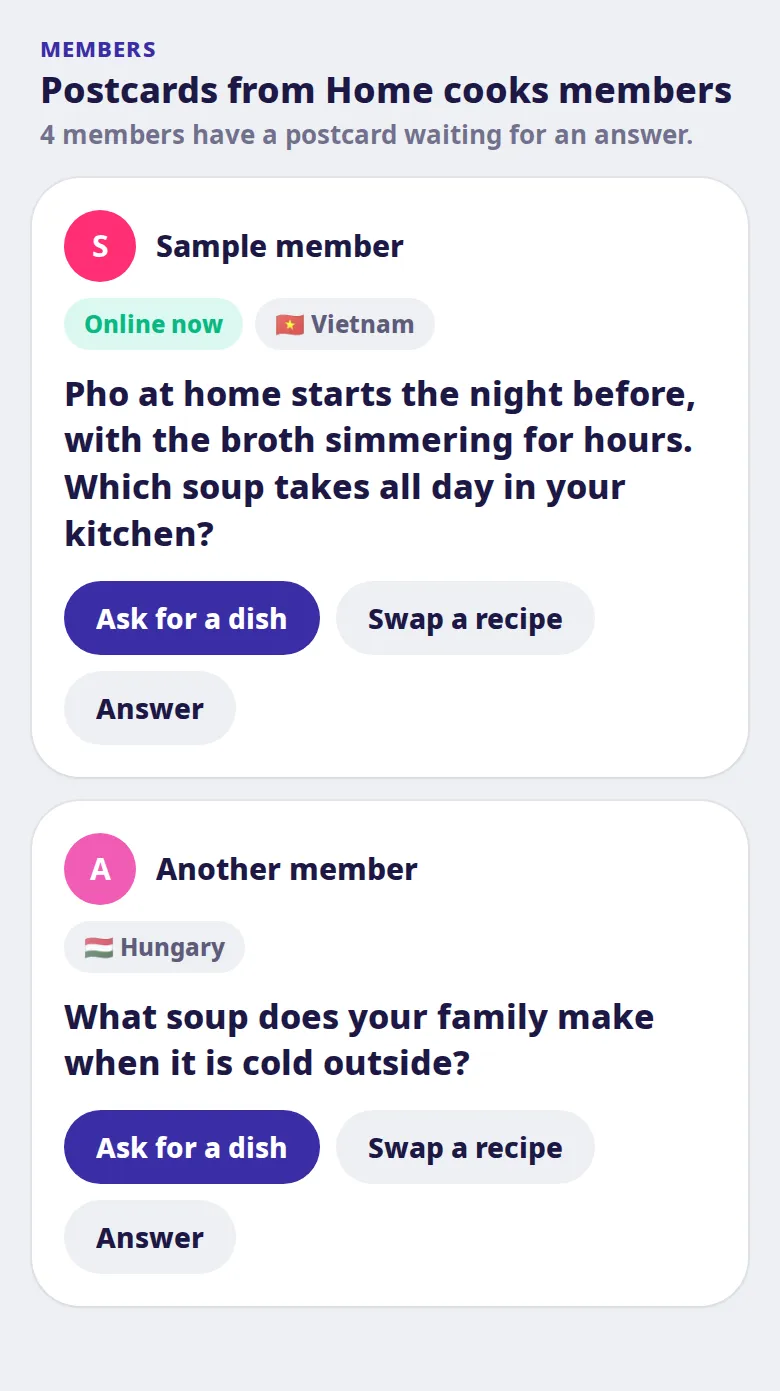 Example screen with sample members, not real people.
A few honest details:
- Every message is translated both ways, with the original visible, so each cook can write in their own language.
- It is text only. No voice and no video. Contact details are stopped before delivery, and report and block are in every chat.
- Adults 18+ only. Birth year is asked at join; there is no ID check.
- No ads and no paid plan. The community is still small, so at quiet hours an answer can take a while.
Questions to ask someone about soup in their country
- What soup does your family make when it is cold outside?
- Which soup takes all day in your kitchen?
- Is there a soup you only cook on one day of the year?
- What do you eat with it: bread, rice, noodles, crackers?
- Which soup from your country do visitors never get to try?
- What is the one thing in your family's soup you would never change?
Soup is an easy way into a conversation about home. Ask about the pot on someone's stove and you will hear about their grandparents, their seasons and their holidays.
Questions people ask
+What is the most famous soup in the world?
There is no single answer. Soups that appear on almost every international list include Vietnamese pho, Japanese miso soup, Ukrainian borscht, Spanish gazpacho, French bouillabaisse, Thai tom yum and Moroccan harira. Most countries have many soups, and the one people love most is often a family recipe that never makes a list.
+Which soups are on UNESCO's heritage lists?
Two soups in this guide are. Haiti's soup joumou was added to UNESCO's intangible cultural heritage list in 2021, and UNESCO recognised the culture of Ukrainian borscht cooking in 2022.
+Which countries have cold soups?
Spain's gazpacho is a chilled soup of puréed tomatoes and other vegetables, served in summer, especially in Andalusia. Bulgaria's tarator is made with yogurt and cucumbers. Okroshka, made with kvass, vegetables and ham, is eaten in Ukraine and Russia.
+Which soups are eaten on a special day?
Haitians eat soup joumou on New Year's Day, 1 January, to mark independence in 1804. In Morocco, harira is often served to break the fast during Ramadan. In Ecuador, fanesca, made with twelve kinds of beans and grains and salt cod, is a Holy Week soup.
+What is the difference between a soup and a stew?
The line is blurry, and it changes from one kitchen to the next. Some dishes in this list, such as goulash, sinigang and cazuela, are called a soup in one source and a stew in another. A soup usually has more liquid, and it is often eaten with a spoon from a bowl.
Keep reading
Boarding pass · free
Tap, fly to a random country, and chat with someone who lives there.
Text first, translated both ways, no video, no coins to meet people. Works in your browser.
Take off on OluNew here? Read Ablo App: The Complete Story of the Chat App That Let You Fly Anywhere (2019–2022), the full history in one place.